1. High-pitched squealing
Most brake pads have a small metal wear indicator that squeals against the rotor when the pad is nearly worn out. It's designed to get your attention — schedule service within a few weeks.
2. Grinding or growling
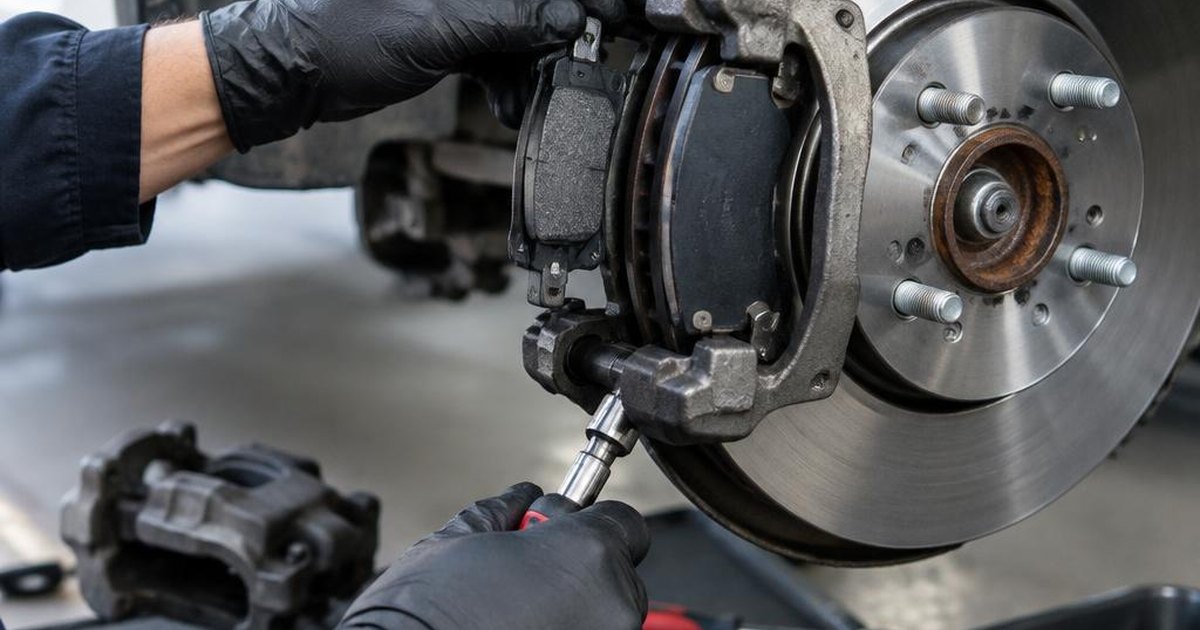
Grinding usually means the pad material is gone and metal is contacting the rotor. This damages rotors quickly and reduces stopping power. Stop driving as much as possible and get it repaired right away.
Need this checked today?
Our mobile mechanics provide brake repair at your location — call 469-421-7910.
3. Vibration or pulsing pedal
A pulsing pedal under braking is often caused by uneven rotor thickness or pad deposits. Rotors may need resurfacing or replacement.
4. Soft or spongy pedal
A pedal that sinks toward the floor can indicate air in the lines, a fluid leak, or a failing master cylinder. This is a safety issue — have it inspected before driving further.
5. Pulling to one side
If the car pulls when braking, a caliper may be sticking or a brake hose may be collapsing internally.
6. Brake warning light
The red brake light can mean low fluid, an engaged parking brake, or a hydraulic problem. An amber ABS light points to a sensor or ABS module fault.
7. Longer stopping distances
Worn pads, old fluid that has absorbed moisture, and overheated rotors all lengthen stopping distance — especially in stop-and-go traffic on I-35, I-45, or US-75.
How often should brakes be checked?
We recommend a brake inspection every 10,000–12,000 miles or once a year. Heavy city traffic, towing, and hilly Hill Country driving wear brakes faster.
Frequently asked questions
How long do brake pads last?
Typically 30,000–60,000 miles, less with heavy city driving.
Is it safe to drive with squeaky brakes?
Short-term, usually — but schedule service soon before squealing turns into grinding.